
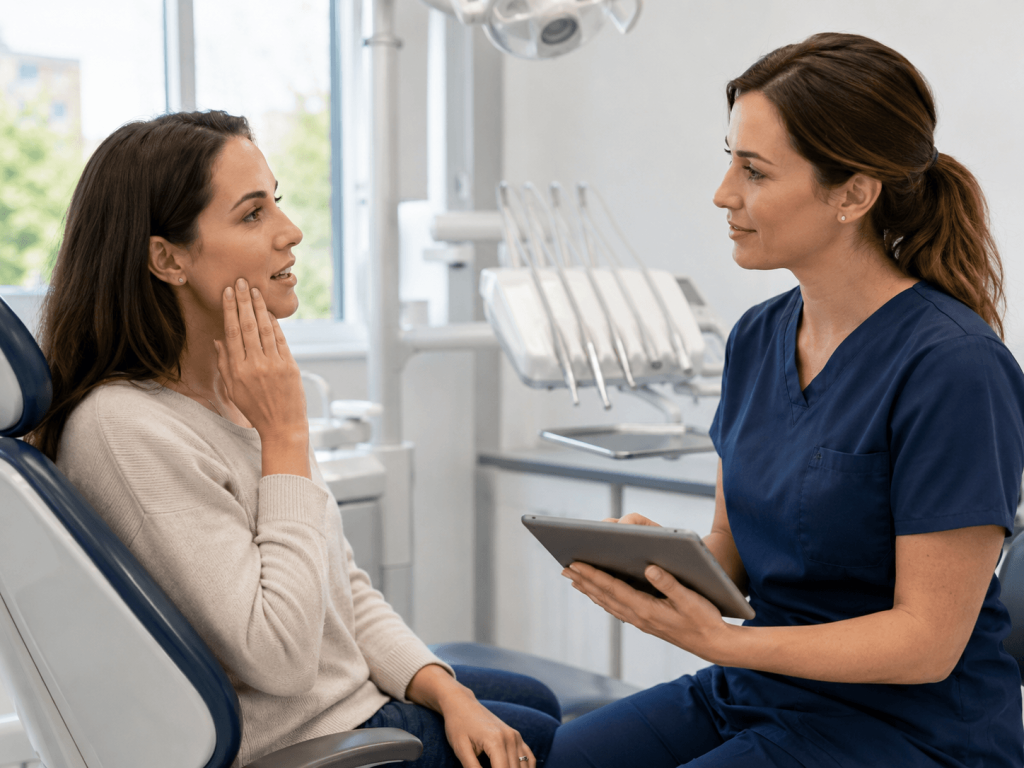
A dental emergency is a problem involving the teeth, gums, mouth or jaw that needs prompt professional attention. Severe pain, swelling, trauma, a knocked-out permanent tooth, uncontrolled bleeding or a badly damaged tooth are all reasons to call a dentist quickly.
Not every dental concern requires the same response. A small, painless chip may be handled differently from facial swelling that affects breathing or swallowing. The safest next step depends on the symptoms, how quickly they developed and whether there has been an injury.
If you’re unsure what to do, call an emergency dentist in Erin Mills for guidance. A dental team can ask about your symptoms and explain the appropriate next step. For life-threatening symptoms, call 911 or seek emergency medical care immediately.
What Counts as a Dental Emergency?
A dental emergency is an oral health problem that should not wait for a routine checkup. It may involve significant pain, swelling, infection warning signs, bleeding, trauma or damage that could worsen without timely assessment.
Urgency isn’t determined by pain alone. A tooth can be seriously damaged without causing constant discomfort, while a less serious problem can sometimes feel very painful. Dentists consider the type of injury, the amount of damage, swelling, bleeding, sensitivity and changes in the way the teeth meet.
Call the dental office promptly if a problem is interfering with eating, sleeping or normal activities, or if the symptoms are getting worse. If you can’t tell whether a concern is urgent, it’s better to ask for guidance than to diagnose it yourself.
Which Dental Problems Need a Prompt Call to a Dentist?
Call a dentist promptly for severe or persistent pain, swelling, dental trauma, a knocked-out or displaced permanent tooth, a significant crack or break, a painful lost restoration or possible infection. The dentist can determine how quickly you should be assessed.
Reasons to call include:
- Severe or persistent tooth pain, especially when it interrupts sleep or makes biting difficult
- Swelling of the gums, face or jaw
- A knocked-out, loosened or displaced permanent tooth
- A broken or cracked tooth with pain, bleeding, a sharp edge or visible inner tooth structure
- A lost filling or crown accompanied by pain, sensitivity or further damage
- Fever, a bad taste, drainage or increasing swelling that may be associated with infection
Some problems are time-sensitive even when the pain is manageable. A knocked-out permanent tooth requires immediate dental guidance. A displaced tooth or a fracture caused by a fall or impact should also be assessed promptly because the visible damage may not show the full extent of the injury.
Don’t wait for symptoms to become unbearable before calling. Early guidance may help you protect the damaged area and avoid making the problem worse while eating, brushing or attempting a home remedy.
When Should You Call 911 or Seek Emergency Medical Care?
Call 911 or seek emergency medical care when a dental or facial problem threatens breathing, swallowing, consciousness or the ability to control bleeding. Major head or facial trauma and rapidly spreading swelling also require medical assessment rather than routine dental care alone.
Medical warning signs can include:
- Difficulty breathing, swallowing or speaking because of swelling
- Rapidly spreading swelling involving the face, jaw, neck or area around an eye
- Severe bleeding that doesn’t stop with firm pressure
- Loss of consciousness, confusion, a seizure or other serious symptoms after a head or facial injury
- A suspected broken jaw or major facial trauma
A dental office is generally the right first call for urgent concerns limited to the teeth and gums when no medical warning signs are present. An emergency department can assess airway problems, serious bleeding, infection complications and major trauma, but dental treatment may still be needed afterward.
If symptoms appear life-threatening or are worsening quickly, don’t delay while trying to reach a dental office. Call 911. When the situation is serious but stable enough for travel, go to the nearest emergency department and arrange dental follow-up when advised.
What Should You Do Before Reaching an Emergency Dentist?
Call the dental office first, briefly describe what happened and follow the instructions you receive. While waiting, protect the area, control bleeding with gentle pressure, keep damaged pieces when practical and avoid actions that could cause further injury.
- Call the dental office and explain the symptoms, when they started and whether an injury occurred.
- Rinse gently with clean, lukewarm water when appropriate. Avoid aggressive rinsing after an extraction or when a dentist has provided different instructions.
- Use clean gauze or a clean cloth to apply firm, steady pressure to a bleeding area.
- Place a cold compress against the outside of the face for short intervals if there is swelling after an injury.
- Save broken tooth pieces or a lost filling or crown and bring them to the appointment. Don’t glue a restoration back into place.
- Avoid chewing on the affected side, and don’t place aspirin or another medication directly against the tooth or gums.
- For a knocked-out permanent tooth, handle it by the crown rather than the root. Keep it moist in cold milk if it can’t be safely returned to its socket, and contact a dentist immediately. Never try to reinsert a baby tooth.
These measures are temporary. They don’t replace a dental examination, and the right response may vary depending on the injury, the tooth involved, your health history and the instructions provided by the dental team.
Can Some Dental Problems Wait for a Regular Appointment?
Some mild problems may not require immediate after-hours treatment, but they should still be discussed with a dental office. A small painless chip, brief sensitivity or a loose restoration may be less urgent when there is no swelling, bleeding, trauma or worsening pain.
Examples may include:
- A small chip with no pain, bleeding, sharp edge or change in the bite
- Mild, short-lived sensitivity without swelling or recent trauma
- A loose or missing restoration without severe pain, although the tooth should be protected and the office should still be called
- Minor gum irritation that improves and isn’t accompanied by spreading swelling or signs of illness
These examples aren’t a self-diagnosis checklist. A seemingly minor crack may extend farther than it appears, and symptoms can change. Contact the dental office if the tooth becomes painful, the area starts swelling, the bite feels different or the damage followed a significant impact.
Routine concerns can often be addressed through general dentistry, where a dentist can examine the tooth and recommend appropriate care. When in doubt, call first rather than deciding to wait based only on how the problem looks.
How Can You Decide Who to Call?
Use the symptoms and the presence of medical warning signs to guide your first call. Urgent problems limited to the teeth or gums usually belong with a dentist, while breathing problems, major trauma, loss of consciousness or uncontrolled bleeding require emergency medical care.
| Symptom or situation | Who to contact | Why or how quickly |
| Severe or persistent tooth pain, localized swelling, a broken or displaced tooth, or a painful lost restoration | Emergency dentist | Call promptly for guidance and assessment. |
| Knocked-out permanent tooth | Emergency dentist | Contact immediately because the situation is time-sensitive. |
| Small painless chip or mild sensitivity without warning signs | Dental office or regular appointment | Call for advice because timing depends on the symptoms and cause. |
| Facial or neck swelling affecting breathing or swallowing | 911 or emergency medical care | Airway symptoms require immediate medical help. |
| Major head or facial trauma, loss of consciousness or uncontrolled bleeding | 911 or an emergency department | Medical assessment takes priority. |
This table provides a starting point, but it can’t replace advice from a dental or medical professional.
What Do Patients Often Ask About Dental Emergencies?
These common questions can help you recognize when to call a dentist and when medical warning signs change the response. If your symptoms don’t fit neatly into one category, contact a professional for guidance.
No. A brief, mild sensitivity may not require emergency treatment, but severe, persistent, worsening or sleep-disrupting pain deserves a prompt dental call. Pain accompanied by swelling, fever, trauma or a bad taste should also be assessed quickly.
It can be. A small painless chip may be less urgent, while a chip with pain, bleeding, a sharp edge, tooth movement or a change in your bite needs prompt guidance. An examination is the only way to assess the extent of the damage.
Act quickly. Hold the permanent tooth by the crown, not the root. If it can’t be safely returned to its socket, keep it moist in cold milk and contact a dentist immediately. Don’t attempt to reinsert a baby tooth.
Seek emergency medical care if swelling affects breathing or swallowing, spreads rapidly through the face or neck, involves the eye area or is accompanied by serious illness. Swelling limited to the teeth or gums still warrants a prompt call to a dentist.
Sometimes, but the safest step is to call the dental office. Urgency depends on pain, sensitivity, sharp edges, remaining tooth structure and whether the restoration was lost after an injury. Protect the area and don’t try to glue the restoration back.
How Can Erin Mills Dental Help With an Urgent Dental Concern?
An urgent dental assessment can identify the source of pain or damage and clarify the next step. Appropriate care depends on the affected tooth, your symptoms, the extent of the problem and what the dentist finds during an examination.
If you have sudden tooth pain, swelling, a broken tooth or another urgent concern, contact Erin Mills Dental for guidance. The team can review your concerns and explain the appropriate next steps based on your situation.
For symptoms affecting breathing, swallowing, consciousness or bleeding control, call 911 or seek emergency medical care instead.